
Local SEO in 2025 has completely changed how customers find and select companies. According to BrightLocal’s annual survey, in 2024, more than 98% of consumers will use the internet to locate local businesses. Understanding local SEO is crucial for small businesses to thrive in a market dominated by larger corporations.
The main battlefield for local visibility is now Google Maps. Being listed in the coveted Local Pack (the top three Google Maps results) when prospective clients look for services “near me” or in particular locations can make the difference between your business succeeding and failing. This thorough guide outlines cutting-edge tactics small businesses can use to dominate local search results in 2025.
Understanding the Local SEO in 2025
With the introduction of artificial intelligence and shifting consumer habits, the local search ecosystem has undergone a significant transformation. More than ever, Google’s algorithms now give priority to user experience signals, genuine reviews, and consistent company information online.If you’re a business looking for complete local SEO services, TopRank India can help you dominate your local market.
The Rise of AI-Powered Local Search
Local results now look different thanks to Google’s Search Generative Experience (SGE). While AI-generated summaries now offer speedy responses, location-based queries still prominently display the Local Pack. To stay visible, businesses need to optimize for both conventional rankings and AI-generated suggestions.
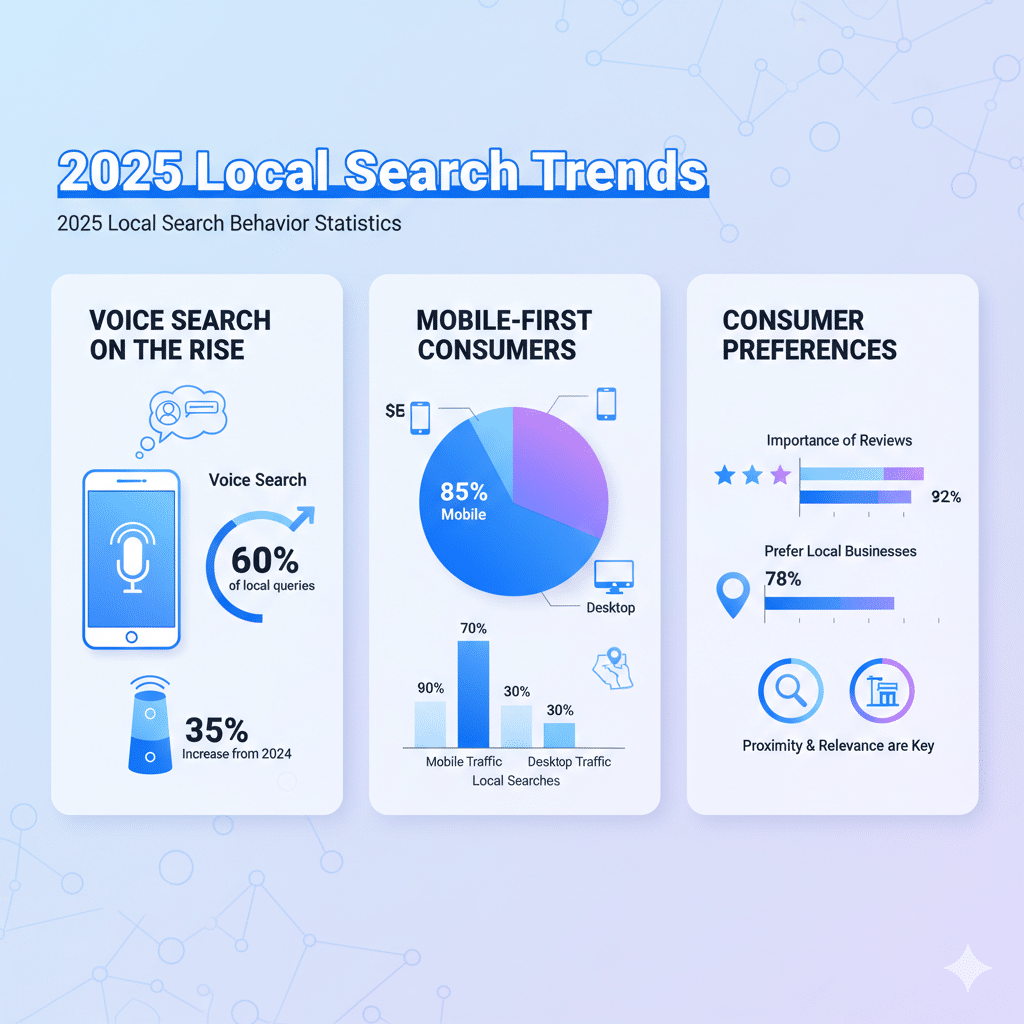
With 58% of consumers using voice search to find local business information, voice search is still on the rise. Instead of using just keywords, these searches usually contain conversational phrases like “best pizza place open now near me.” Natural language patterns must be taken into consideration in your optimization strategy.
Why Google Business Profile Reigns Supreme
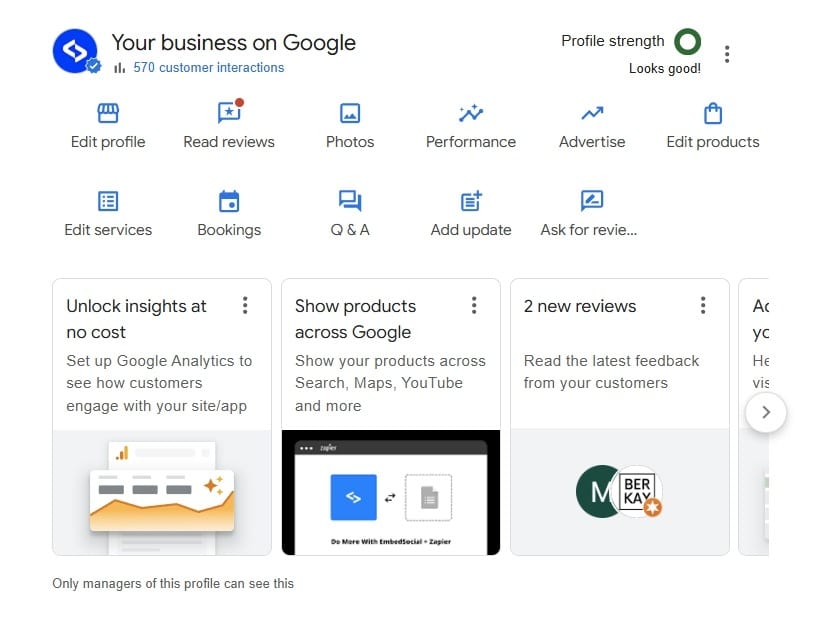
Your online storefront is your Google Business Profile, also known as Google My Business or GMB. For local search rankings, it is the most important factor. Although Google’s algorithm considers more than 200 ranking factors, relevance, distance, and prominence are the three main categories that predominate.
Compared to businesses with incomplete profiles, those with optimized and complete profiles receive 70% more location visits. Google is informed that your company is genuine and operational by frequent updates, new images, and active engagement. Top-ranked companies are distinguished from their rivals by this constant upkeep.
Optimizing Your Google Business Profile for Maximum Visibility
Creating a Google Business Profile is a quick process that only takes a few minutes, but to really make it shine and give you an edge over the competition, you need to pay close attention to the details. Every single part of your profile plays a role in boosting your conversion rates and enhancing your overall ranking potential.
Complete Every Profile Section Thoroughly
Make sure to fill out every section of your profile. Google really rewards completeness! Companies with fully filled-out profiles tend to rank higher than those that are lacking. You’ll want to include essential details like your company name, address, phone number (NAP), website URL, and business hours.
Pick the most specific business category that fits what you offer. The primary category you choose has a big impact on the searches that lead to your profile. After you’ve selected the best category for your main service, feel free to add secondary categories for any additional offerings. For instance, instead of just going with “Restaurant,” if you specialize in Italian cuisine, you should opt for “Italian Restaurant.”
Don’t forget to write a detailed business description that naturally incorporates your target keywords. You have up to 750 characters to explain the services you provide, what makes your company unique, and what clients can expect. Highlight your specializations, the areas you serve, and any unique selling points that differentiate you from the competition..
Attributes That Drive Conversions
Google Business Profile attributes are a great way for customers to find businesses that meet their specific needs. These attributes can include things like “wheelchair accessible,” “outdoor seating,” “free Wi-Fi,” or “women-led.” Make sure to select all the attributes that genuinely apply to your business.
Don’t forget that seasonal or temporary attributes need to be updated regularly. If you have special holiday hours, curbside pickup, or any temporary services, be sure to enable those attributes right away. Google tends to favor businesses that accurately reflect their current operational status, especially since the pandemic has shifted customer expectations for good.
The Products and Services Section Advantage
A lot of businesses tend to overlook the Products and Services section, which means they’re missing out on some valuable ranking opportunities. It’s important to add detailed descriptions for each service you provide, making sure to include relevant keywords that potential customers might use when they’re searching.
For service-oriented businesses, it’s a good idea to create separate entries for each type of service. For instance, a digital marketing agency should clearly list “SEO services,” “social media management,” “content marketing,” and “PPC advertising” as individual offerings. Each entry should have a description that’s between 100-300 words, outlining the service, its benefits, and what deliverables clients can expect.
On the other hand, product-based businesses should showcase clear photos, prices, and detailed descriptions for their most popular items. This information will show up directly in search results, which can help convert customers even before they click through to your website.
Building a Review Strategy That Dominates Rankings
Online reviews have really taken on the role of modern-day word-of-mouth recommendations. They play a crucial part in shaping local search rankings and have a big impact on how much trust consumers place in a business, as well as their likelihood to make a purchase. Companies that boast higher ratings and a greater number of reviews consistently outshine their competitors who have fewer or lower-rated reviews.
The Mathematical Reality of Review Volume
Google’s algorithm considers both the quantity and quality of reviews. For example, a business with 200 reviews averaging 4.5 stars is likely to rank higher than a competitor with only 50 reviews averaging 5 stars. This creates a snowball effect—more reviews lead to better rankings, which increases visibility, resulting in even more reviews. Aim to collect at least 5 to 10 new reviews each month. This consistent flow shows that you’re actively engaging with your customers and staying relevant. Just be careful; if a business suddenly receives a surge of reviews in a short period, it could raise red flags with spam filters. So, it’s best to focus on steady growth rather than erratic spikes.
Implementing Effective Review Generation Systems
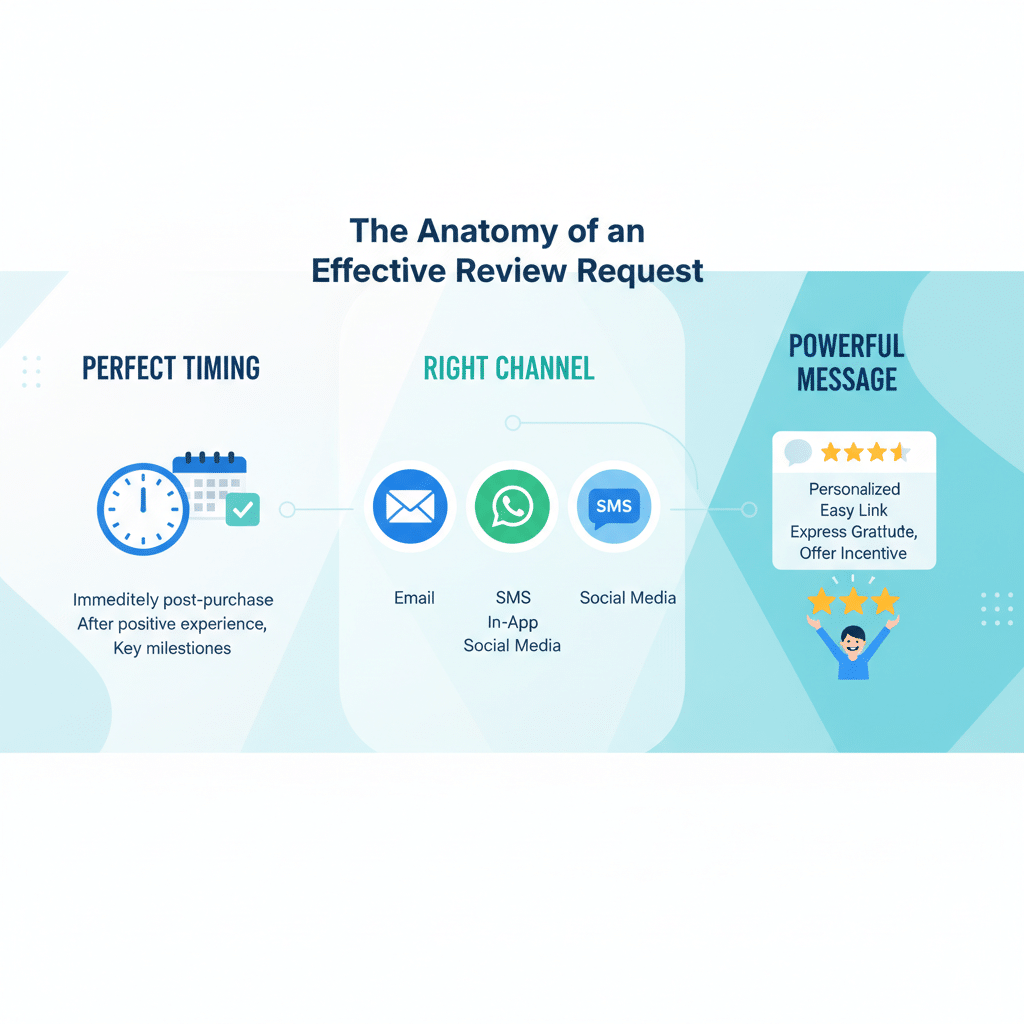
Make it easy to ask for reviews right after your customers have a great experience. The best time to reach out for feedback is within 24 to 48 hours after the service is done, when their satisfaction is at its peak and their memories are still fresh. Using automated systems to request reviews can help you manage this without piling on extra work.
Instead of giving general instructions, provide direct links to your Google review page. The simpler you make it, the more likely people are to respond. You can create a shortened review link through Google or use a service that makes mobile-friendly review request pages.
Avoid offering incentives like discounts or freebies for reviews. Google clearly states that this is against their rules, and they might remove reviews or even penalize your profile if they catch you. Instead, focus on providing outstanding service that encourages customers to share their positive experiences naturally.
Responding to Reviews: The Underutilized Ranking Factor
Reviewing responses shows that businesses are actively engaging with their customers, which can really boost how people perceive them. Google’s algorithm takes into account both how quickly and how well businesses respond to reviews when determining rankings. Companies that reply to every single review often find themselves ranking higher than those that choose to overlook customer feedback.
When it comes to positive reviews, it’s best to respond with personalized thank-you notes that highlight specific points from the review. A generic “Thanks for your review!” just misses the mark and squanders a chance to reinforce those good vibes and encourage customers to return. Make sure to include the customer’s name and touch on what they specifically enjoyed.
On the flip side, negative reviews need a thoughtful and professional approach. It’s crucial to show that you’re committed to solving any issues. Avoid arguing, making excuses, or getting defensive. Instead, acknowledge the concern, apologize for the experience, provide any relevant context, and offer to resolve the issue privately. Remember, future customers will read these responses to see how you handle challenges.
Local Citation Building and NAP Consistency
Citations—those mentions of your business name, address, and phone number scattered across the internet—serve as trust signals for Google’s algorithm. When you have consistent citations from reputable directories, it boosts your local search rankings. On the flip side, if the information is inconsistent, it can confuse search engines and hurt your ranking potential.
.
The Foundation: Core Citation Platforms
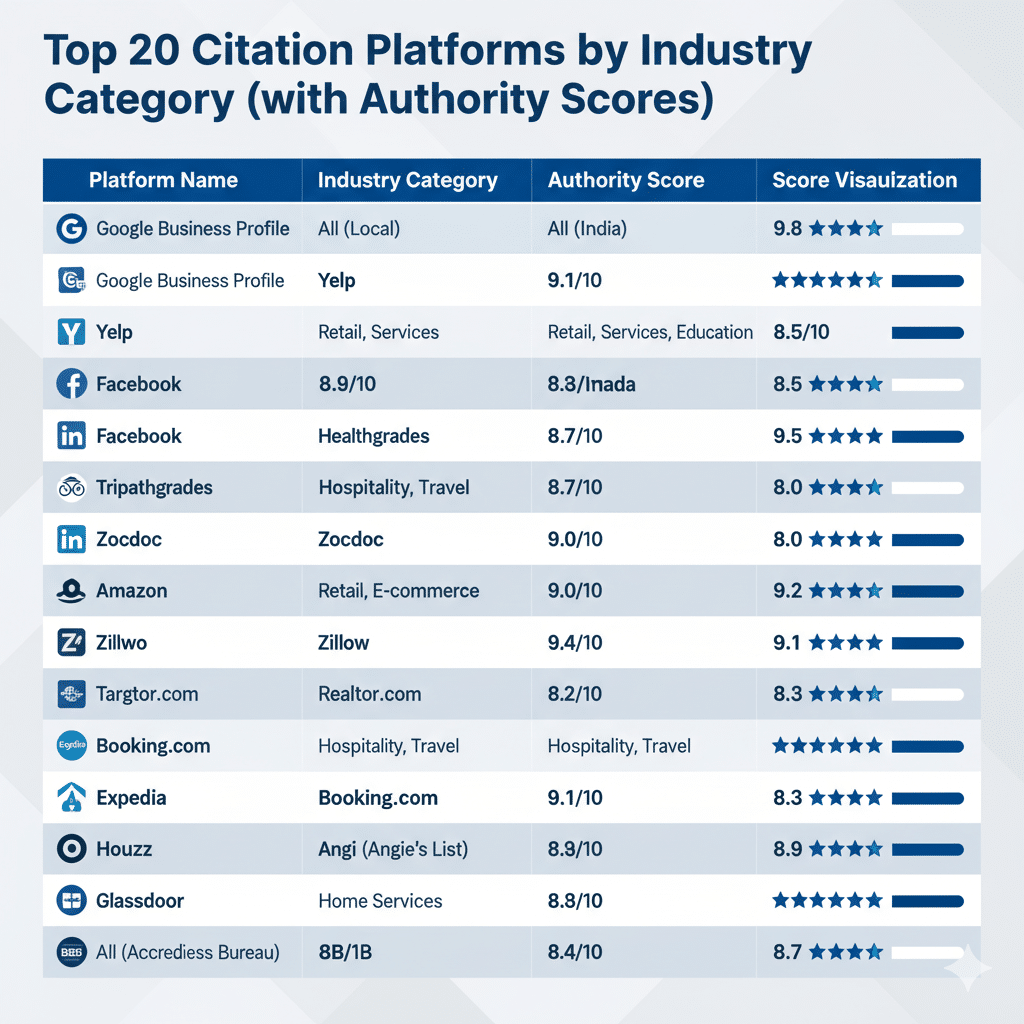
Start with major citation platforms that carry the most ranking weight. These include Yelp, Facebook, Better Business Bureau, Yellow Pages, Bing Places, Apple Maps, and industry-specific directories relevant to your business type. According to Whitespark’s local search ranking factors survey, these platforms contribute significantly to local pack rankings.
Ensure your NAP information matches exactly across all platforms. Even minor variations like “Street” versus “St.” or including/excluding suite numbers creates inconsistencies that dilute ranking signals. Establish one canonical format and use it universally across all platforms and marketing materials.
Industry-Specific and Geographic Citations
Beyond general directories, identify niche directories specific to your industry. Restaurants should claim listings on OpenTable, TripAdvisor, and Zomato. Healthcare providers need profiles on Healthgrades and Zocdoc. Professional services benefit from LinkedIn, Avvo, or field-specific associations.
Local chamber of commerce websites, community event calendars, and neighborhood association listings provide valuable geographic citations. These locally-focused mentions strengthen your relevance for area-specific searches. Many small businesses overlook these opportunities despite their relatively easy acquisition and strong local authority signals.
Citation Cleanup and Management
Many businesses find themselves dealing with inconsistent citations that have built up over the years. To tackle this, you can use citation audit tools to pinpoint all the current mentions of your business. If you’re looking for a thorough approach, the complete GMB optimization checklist from TopRank India offers detailed procedures for conducting citation audits, which can help you spot and fix any inconsistencies.
For citations that you can edit, take the time to manually correct any inaccuracies on the platforms where you manage your listings. If there are citations you can’t directly change, reach out to the platform’s administrator or submit requests for corrections. While this process might seem tedious, it can lead to significant improvements in your rankings by reinforcing the consistency signals that Google relies on to verify your business information.
Creating Location-Specific Content That Ranks
When it comes to content marketing for local SEO, it’s all about being specific to your area instead of just churning out generic blog posts. Your website should clearly link your services to the neighborhoods you serve, using local lingo and focusing on the unique needs of the community.
The Local Landing Page Strategy
To effectively reach your audience, create dedicated landing pages for each geographic area you serve. Make sure to include the location name in the URL, title tag, H1 heading, and weave it naturally throughout the content. For instance, if you’re a plumbing company operating in multiple cities, it’s much better to have specific pages like “Emergency Plumbing Services in Austin” instead of a generic “Our Service Areas” page.
Each location page should feature unique content—avoid simply swapping out the city name in the same text. Google is smart enough to catch on to this and may penalize you for having thin, duplicated content. Instead, enrich each page with details that are specific to the area, such as local landmarks, neighborhood names, services tailored to that community, and references that show you really know the place.
Local Content That Attracts Links and Shares
Get involved in community events—sponsor them or participate—and then share your experiences through blog posts, photos, and videos. This approach serves several purposes: it showcases your commitment to the community, provides shareable content for social media, and can even lead to local news coverage that brings in valuable backlinks.
The Power of Embedded Google Maps
Want to make your website more user-friendly? Start by embedding Google Maps on your contact page and any location-specific landing pages. This not only helps with location relevance but also gives visitors a handy way to find directions. Make sure the map showcases your full Google Business Profile, including reviews and photos, so potential customers can see what you’re all about.
Also, consider creating blog posts that highlight local geography, neighborhoods, and landmarks. When you talk about your service areas or share customer testimonials, be specific—like saying, “our team just wrapped up a kitchen remodel in the Riverside District.” These local touches really enhance your relevance for searches tied to specific locations.
Technical SEO Foundations for Local Rankings
Technical optimization ensures search engines can properly crawl, understand, and index your local business information. Many small businesses neglect these foundational elements, creating unnecessary barriers to ranking success.
Schema Markup Implementation
Structured data markup helps search engines understand your website’s content with precision. LocalBusiness schema tells Google exactly what type of business you operate, where you’re located, your hours, contact information, and accepted payment methods. This information may display directly in search results as rich snippets.
Implement schema markup for multiple entity types: LocalBusiness, Service, Review, FAQ, and breadcrumb navigation. Tools like Google’s Structured Data Markup Helper simplify this process for non-technical users. After implementation, validate your markup using Google’s Rich Results Test to ensure proper formatting.
Service area businesses should use ServiceArea schema to define their coverage area when they don’t have a physical location customers visit. This prevents confusion about where you actually provide services versus where your office is located.
Mobile Optimization Is Non-Negotiable
Over 61% of local searches occur on mobile devices, according to Think with Google research. Your website must load quickly and function perfectly on smartphones. Google’s mobile-first indexing means the mobile version of your site determines your search rankings, not the desktop version.
Test your site speed using Google PageSpeed Insights and address critical issues immediately. Slow-loading sites experience higher bounce rates and lower rankings. Compress images, minimize code, leverage browser caching, and consider upgrading hosting if current infrastructure limits performance.
Ensure phone numbers are click-to-call on mobile devices and addresses link to mapping applications. These micro-conversions significantly improve user experience and may positively influence local ranking factors through improved engagement signals.
Website Security and Local Trust Signals
HTTPS encryption has become a ranking factor and consumer expectation. Websites without SSL certificates display security warnings that frighten potential customers and may harm rankings. This relatively inexpensive upgrade demonstrates professionalism and protects customer data.
Display trust signals prominently: physical address, phone number, business hours, associations, certifications, and awards. These elements build credibility with both search engines and potential customers. Include photos of your physical location, team members, and actual work to humanize your digital presence.
Link Building Strategies for Local Authority
Backlinks remain among the most powerful ranking factors, but local businesses need links from locally-relevant sources rather than random websites. A single backlink from a respected local news site carries more local ranking value than numerous irrelevant directory links.
Local News and Media Outreach
Local newspapers, magazines, radio stations, and television stations constantly need content. Position yourself as a local expert source for stories related to your industry. Send press releases about business milestones, community involvement, unique services, or expert commentary on industry trends.
Create newsworthy events or initiatives that attract media attention. Host community workshops, sponsor local charities, conduct relevant research about local issues, or take innovative approaches to common problems. When local media covers these activities, you earn valuable backlinks and brand exposure simultaneously.
Strategic Partnership Link Opportunities
Form relationships with complementary local businesses and organizations. A wedding photographer might partner with venues, caterers, florists, and bridal shops for mutual referrals and website links. These contextually-relevant local links signal strong community integration to search algorithms.
Join local business associations, chambers of commerce, and industry organizations. Membership typically includes directory listings with backlinks. Beyond the SEO value, these connections provide networking opportunities and potential customer referrals.
(Insert image suggestion: Visual diagram showing link building ecosystem for local businesses: media, partnerships, community, and industry connections)
Earning Links Through Valuable Resources
Create genuinely useful resources that local websites want to link to: comprehensive guides, local statistics, tools, or datasets. A real estate agent might create a detailed neighborhood guide with schools, parks, crime statistics, and local amenities. Local bloggers, community websites, and news outlets naturally link to high-quality local resources.
Sponsor local events, sports teams, or nonprofit initiatives. Sponsorships often include website recognition with backlinks. Choose opportunities aligned with your target audience’s interests for maximum marketing value beyond the SEO benefit.
Social Media Integration for Local Visibility
While social signals don’t directly impact Google rankings, social media platforms drive traffic, build brand awareness, and create opportunities for review generation and link building. An integrated social strategy amplifies all other local SEO efforts.
Platform Selection and Local Focus
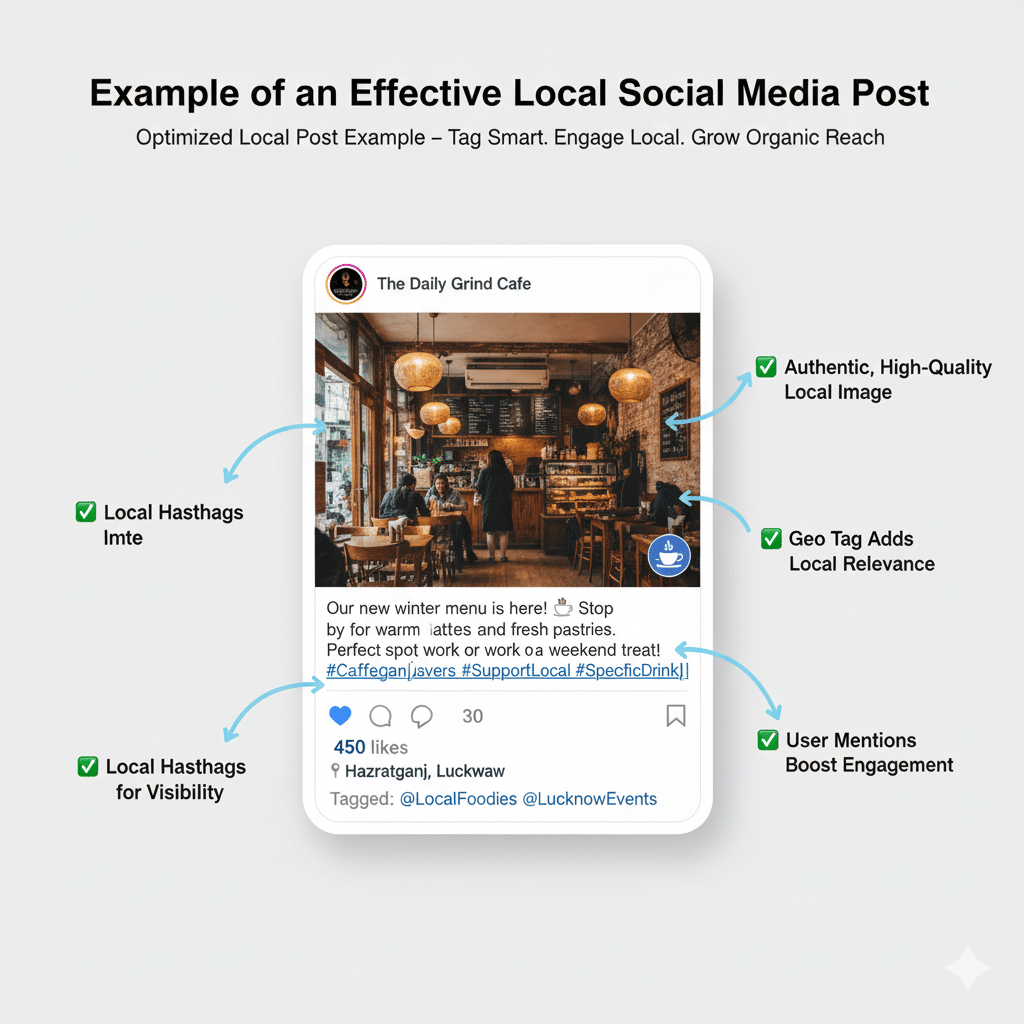
Focus energy on platforms where your target customers actively engage. Facebook remains dominant for local business discovery with over 200 million users accessing local business information monthly. Instagram works well for visual businesses like restaurants, salons, and retail stores.
Create location-specific content: share photos of your work in recognizable local areas, tag posts with precise locations, mention local events, and engage with local influencers and community accounts. Geographic tagging makes your content discoverable to users searching location-based hashtags or exploring nearby posts.
Encouraging User-Generated Content
Customer photos and testimonials provide authentic social proof while generating fresh content. Encourage customers to tag your business in their posts and stories. Reshare this user-generated content to demonstrate social proof and active customer relationships.
Create location-specific hashtags for your business and encourage their use. While primarily for brand building rather than SEO, these tactics increase online visibility and create multiple touchpoints where potential customers encounter your brand.
Social Profile Optimization
Treat social media profiles like additional citation platforms. Ensure NAP information matches exactly across all profiles. Complete every profile section thoroughly, use consistent branding, and include links back to your website and Google Business Profile.
Regular posting demonstrates business activity and keeps your brand top-of-mind. Consistency matters more than frequency—better to post quality content twice weekly than mediocre content daily. Share mix of promotional content, educational information, behind-the-scenes glimpses, and community engagement.
Measuring Success: Local SEO Analytics and KPIs
To truly optimize your efforts, it’s essential to measure results and tweak your strategies based on the data you gather. When it comes to local SEO, success hinges on a variety of metrics that go beyond just tracking your ranking positions.
Google Business Profile Insights
Your profile insights can tell you a lot about how customers discover and engage with your listing. Keep an eye on the search queries that lead to your profile, the ratio of views to actions, direction requests, phone calls, and website clicks. If you notice any declining metrics, it might be a sign that there are opportunities for optimization or that new competitors are emerging.
Make sure to track how your profile shows up in different types of searches: direct searches (where people search for your brand), discovery searches (where they look for a category or service), and the ratio of branded to non-branded search volume. An increase in discovery search volume is a good indicator that your rankings for competitive keywords are improving.
Local Ranking Tracking
It’s important to keep tabs on how your target keywords rank from various locations within your service area, as rankings can differ quite a bit depending on where the searcher is located. Tools like BrightLocal, Whitespark, or Local Falcon can help you accurately track local rankings, including positions in the Local Pack.
Be sure to monitor both Local Pack rankings and organic results separately. Some businesses might perform well in organic searches but struggle in the Local Pack, or the other way around. Each scenario requires a different focus for optimization.
Website Analytics for Local Traffic
Configure Google Analytics with location filters to isolate local traffic patterns. Measure organic traffic from your target geographic areas, conversion rates for location-specific landing pages, and user behavior metrics indicating content quality.
Set up goals for key conversions: phone calls, direction requests, contact form submissions, and appointment bookings. Calculate cost per acquisition for local SEO compared to other marketing channels to justify continued investment.
Review and Citation Monitoring
Track review volume, average rating trends, and review response rates monthly. Sudden rating drops or review volume decreases signal problems requiring immediate attention. Monitor competitor review generation to ensure you maintain competitive parity.
Audit citations quarterly to identify new inconsistencies or incorrect listings. The internet constantly changes; new directories appear, businesses get sold, and old information resurfaces. Proactive citation management prevents ranking erosion from inconsistent data spreading across the web.
Advanced Local SEO Tactics for Competitive Markets
If you’re running a business in a fiercely competitive market, you need to step up your game with strategies that go beyond the basics. These advanced tactics can give you the upper hand against those well-established rivals.
Hyperlocal Content Targeting
Focus on creating content that zeroes in on specific neighborhoods, districts, or communities within your service area. For instance, a pest control company in Los Angeles could develop tailored content for areas like Beverly Hills, Santa Monica, Downtown LA, and the San Fernando Valley, each addressing unique pest issues relevant to those locales.
Think about crafting content that highlights local landmarks, streets, or specific buildings you service. For example, “Office Cleaning Services for Downtown Financial District Skyscrapers” is much more targeted than “Office Cleaning in San Francisco,” and it may face less competition.
Video Content for Local Engagement
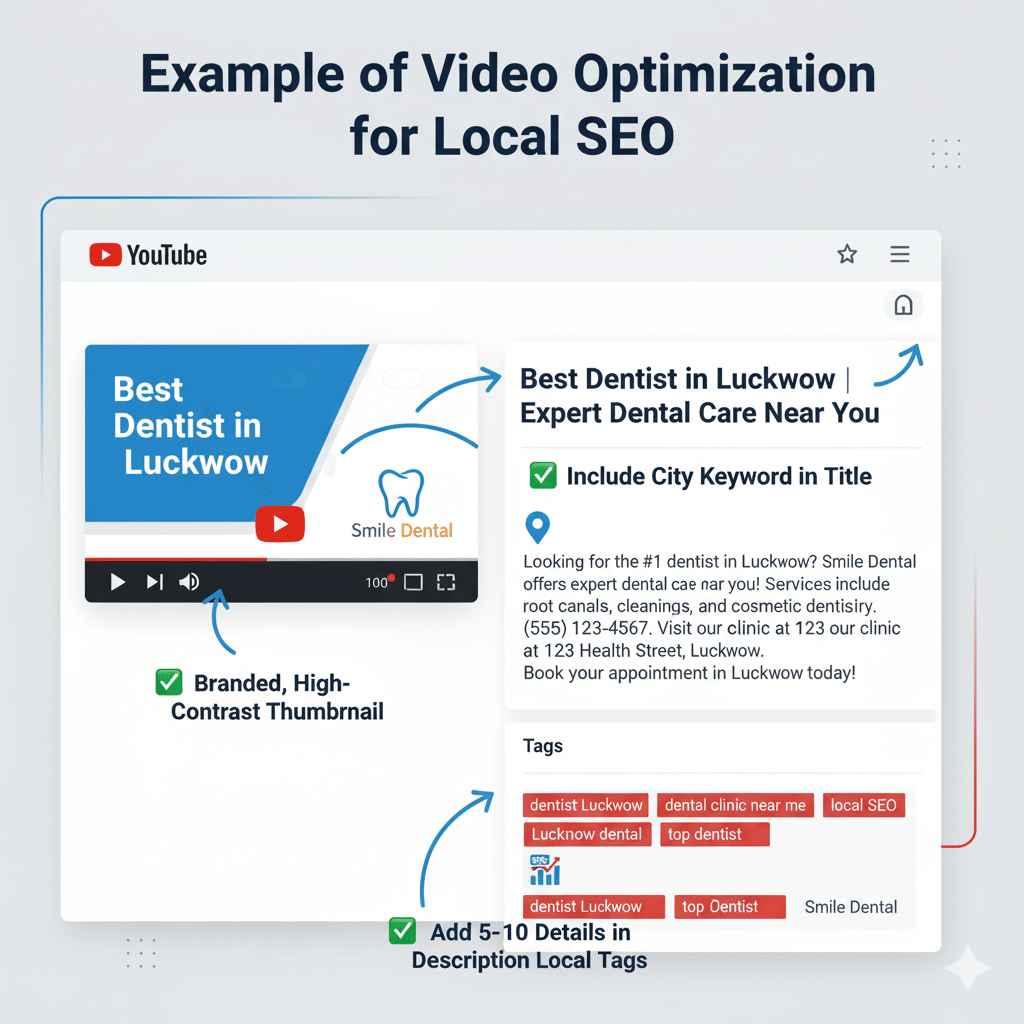
Video is king when it comes to content consumption, and it opens up fantastic local SEO opportunities. Consider making videos that showcase your location, your team, the services you offer, and even customer testimonials. Upload these to YouTube with titles, descriptions, and tags that are specific to your location. You can also embed these videos on the relevant pages of your website.
Google tends to favor video content in search results. A well-optimized video titled “Emergency Plumbing Services in Boston” could show up in both video results and the local pack, significantly boosting your visibility.
(This Image is generated from AI)
Google Posts for Ongoing Engagement
Regular Google Posts keep your profile active and provide opportunities to highlight offerings, events, or promotions directly in search results. Posts appear on your profile for seven days (offers for 14 days) before moving to an archive.
Create Posts announcing new services, seasonal offerings, special hours, events, or company news. Include compelling images, clear calls-to-action, and relevant keywords. While Posts don’t directly impact rankings, they demonstrate active management and may improve engagement metrics.
Competitive Gap Analysis
Systematically analyze top-ranking competitors to identify their advantages. Compare review volume and ratings, citation presence, content depth, backlink profiles, and website technical optimization. This reveals specific areas where competitors exceed your performance.
Tools like Semrush, Ahrefs, or Moz Local provide competitive analysis features. Don’t copy competitors exactly, but identify patterns among top performers indicating what Google rewards in your specific market.
Common Local SEO Mistakes to Avoid
Even sophisticated businesses make critical errors that undermine local rankings. Awareness of these pitfalls prevents wasting effort on counterproductive practices.
Inconsistent NAP Information
The most common and damaging mistake involves NAP inconsistencies across platforms. Variations in business names, different phone numbers, or outdated addresses confuse search engines and customers. Every mention should match exactly, including formatting, punctuation, and abbreviations.
When businesses relocate, change names, or update phone numbers, update all online mentions immediately. Lingering incorrect information dilutes ranking signals and frustrates potential customers who encounter wrong details.
Keyword Stuffing and Over-Optimization
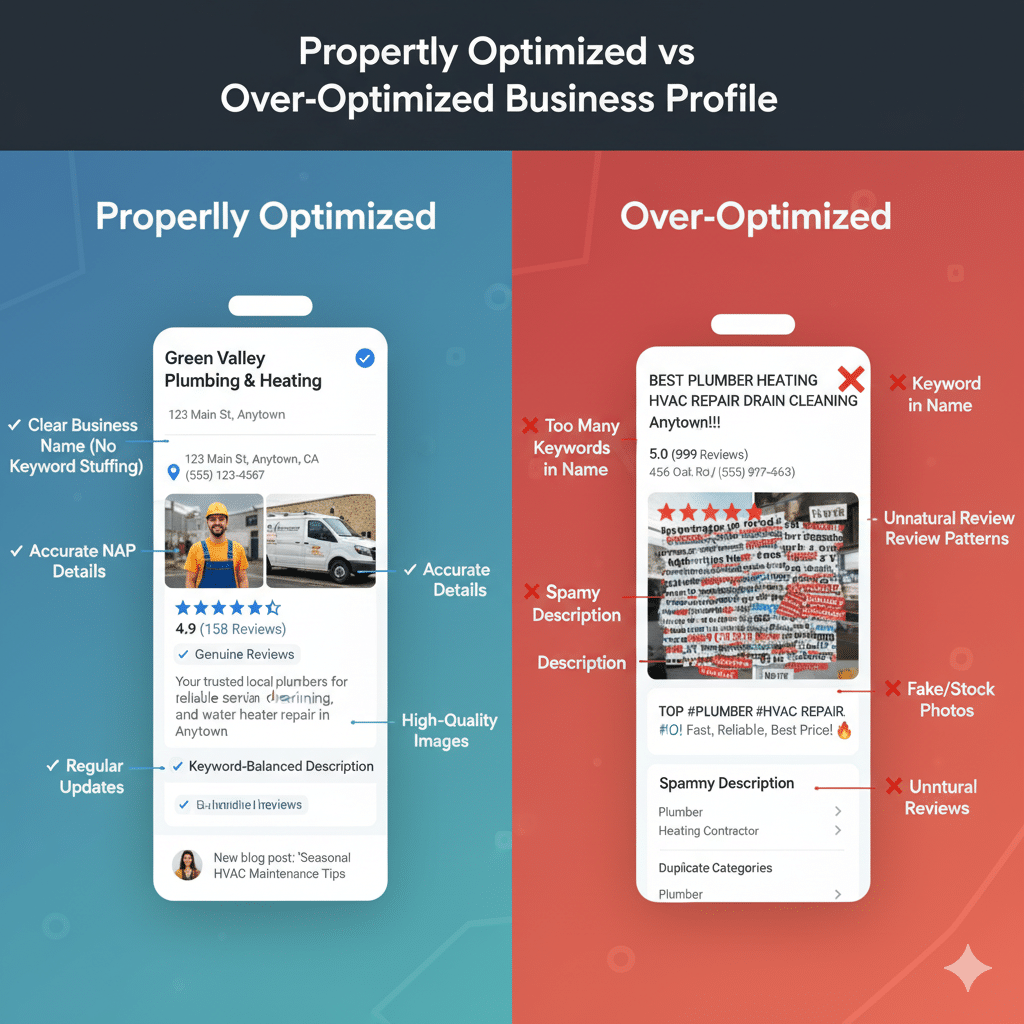
Unnaturally cramming keywords into business names, descriptions, or content triggers penalties. “Joe’s Plumbing | Best Emergency Plumber Austin | 24/7 Plumbing Services Austin TX” appears spammy rather than professional. Use your actual registered business name without keyword additions.
Write for humans first, search engines second. Natural language that communicates clearly to readers inherently contains appropriate keyword usage. Forced, awkward phrasing damages user experience while potentially triggering algorithmic penalties.
Neglecting Negative Reviews
Ignoring negative reviews signals poor customer service and allows one-sided narratives to stand unchallenged. Address every negative review professionally and promptly. This public problem-solving demonstrates commitment to customer satisfaction and potentially converts critics into advocates.
Never delete negative reviews unless they violate Google’s policies (spam, fake reviews, or prohibited content). Legitimate criticism, even if harsh, belongs in your public profile. How you respond matters more than the occasional negative experience.
Setting and Forgetting Your Profile
Local SEO requires ongoing maintenance, not one-time setup. Businesses that create profiles then ignore them miss ranking opportunities and allow information to become outdated. Regular updates, fresh photos, Posts, and engagement signal active businesses that deserve higher visibility.
Schedule monthly profile reviews to add new photos, update business hours for holidays, announce new services, and ensure all information remains current. This consistent attention compounds over time into significant ranking advantages.
The Future of Local SEO: Preparing for Tomorrow
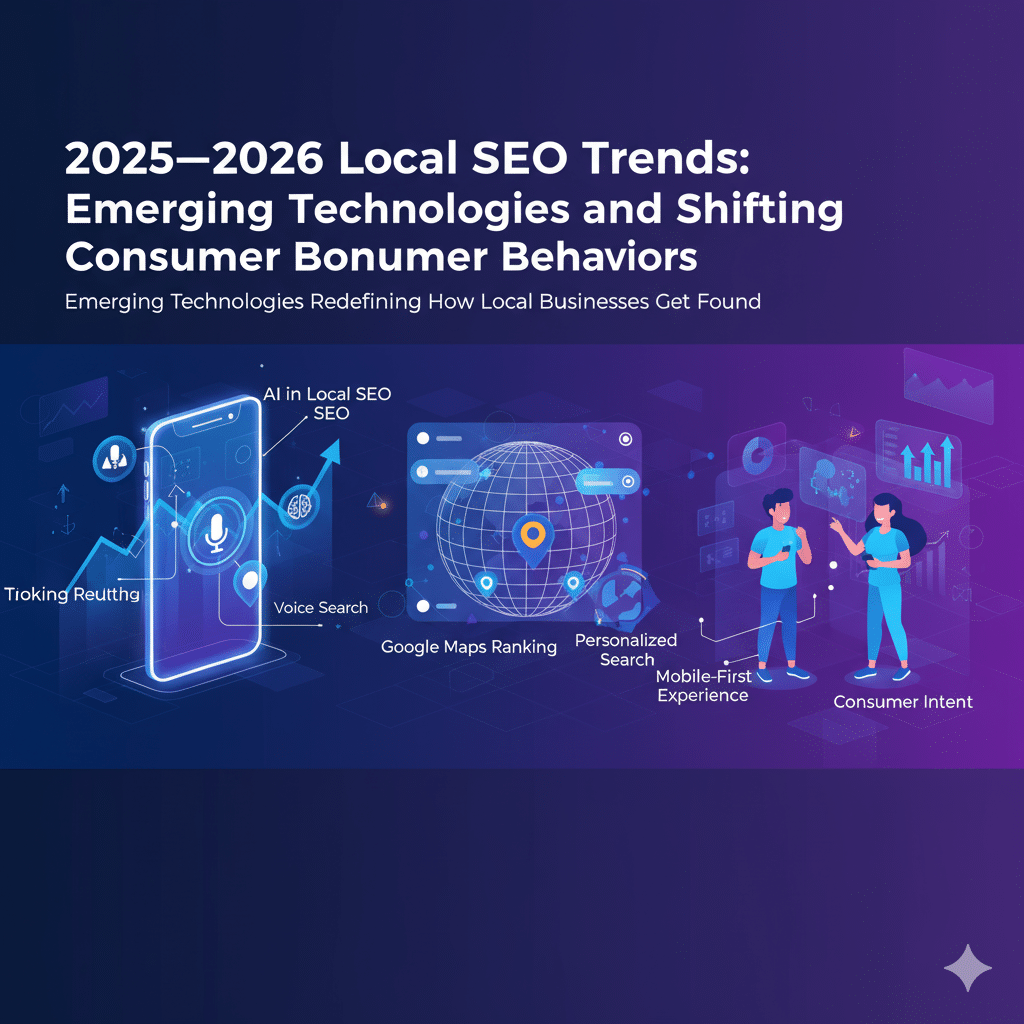
Understanding emerging trends helps businesses stay ahead of algorithm changes and shifting consumer behaviors. Several developments will shape local SEO strategies beyond 2025.
AI and Natural Language Processing
Google’s AI is getting better at grasping the intent behind search queries instead of just focusing on exact keywords. It’s all about optimizing for broader topics and concepts rather than sticking to specific phrases. Content that thoroughly answers questions about a subject tends to perform much better than thin content that just targets keywords.
As voice search continues to rise, it’s essential to optimize for conversational queries. People tend to speak differently than they type, often using full questions instead of just short keyword phrases. So, make sure to include FAQ sections that tackle common questions customers have, using natural language.
Visual Search Integration
Google Lens and similar visual search tools allow customers to photograph products or locations and search for information. Ensure your business appears in these results by optimizing images with descriptive filenames, alt text, and structured data markup.
High-quality, well-lit photos of your business, products, and services become increasingly important. Visual content helps with traditional search while preparing for visual search’s expansion.
Personalization and Behavioral Signals
Search results increasingly personalize based on individual user history, preferences, and behaviors. While you cannot directly control personalization, providing excellent user experiences encourages positive behavioral signals (longer site visits, lower bounce rates, repeat visits) that influence future personalized results.
Focus on genuine customer satisfaction and engagement rather than gaming algorithms. Long-term success comes from meeting real user needs rather than exploiting temporary ranking loopholes.
Conclusion
Achieving local SEO success in 2025 means executing a well-rounded strategy that spans various interconnected channels. For small businesses, dedicating time and effort to consistently optimize their Google Business Profile, citations, content, reviews, and technical basics can lead to impressive local visibility, even when competing against bigger players with larger budgets.
Start with the essentials—claim and fully optimize your Google Business Profile, ensure your Name, Address, and Phone number (NAP) are consistent across key platforms, and tackle the basics of technical SEO. Once you have that down, you can gradually introduce more advanced tactics like hyperlocal content, strategic link building, and video integration.
Keep in mind that local SEO is more of a marathon than a sprint. Rankings take time to improve, relying on steady effort rather than quick fixes. Businesses that stick to regular optimization practices, actively engage with their customers, and stay adaptable to algorithm changes will find themselves at the top of Google Maps results, while their competitors struggle to be seen.
The small businesses that will thrive in local search in 2025 aren’t necessarily the biggest or most established; they’re the ones that truly grasp and consistently apply comprehensive local SEO strategies with a commitment to excellence. Your ranking in local search results is a direct reflection of the effort you put into these optimization strategies.
Start today with a Free Local SEO Audit to identify exactly where your business stands.